
Boston has hundreds of moving companies, and the gap between the best and worst of them is wider than in almost any other service industry. A great crew makes the hardest day of your year feel routine. A bad one holds your furniture hostage on a truck until you pay double.
The good news: telling them apart takes about twenty minutes of research, if you know what to check. This guide is that checklist: the licenses a legitimate Boston mover must hold, the insurance that actually protects your belongings, the red flags that predict a scam, and the exact questions that separate professionals from pretenders.
Step One: Verify the License
Moving is a licensed trade, and every legitimate company carries credentials you can verify in minutes.
For moves within Massachusetts, movers are regulated at the state level. A company hauling household goods between two Massachusetts addresses must be licensed to do it. Ask for their state license status and confirm it before booking.
For moves crossing state lines, federal rules apply. Interstate movers must hold a USDOT number and an MC number issued by the Federal Motor Carrier Safety Administration. Both are public record: paste the USDOT number into the FMCSA database and you will see the company’s legal name, fleet size, insurance status, and complaint history in one screen.
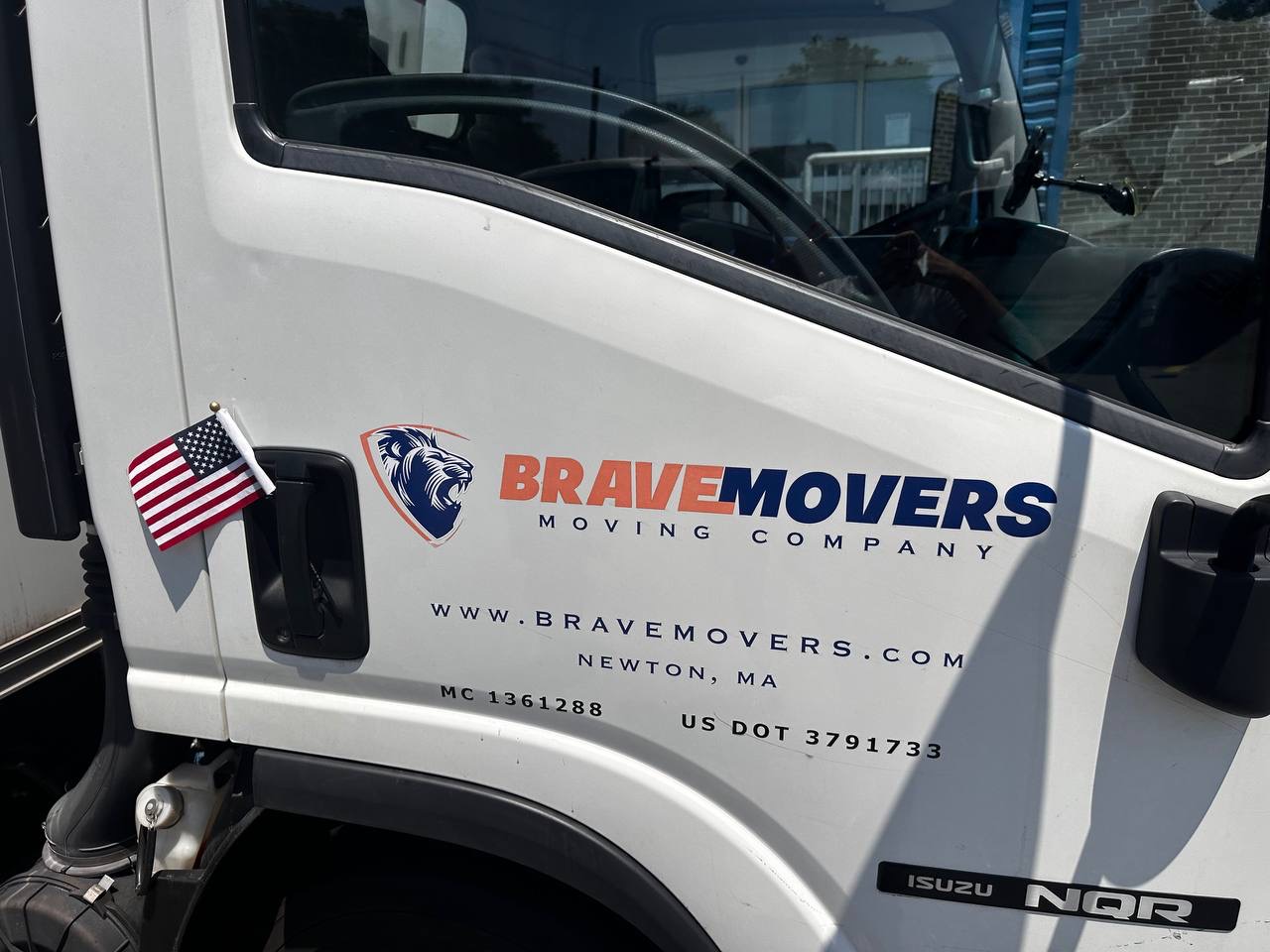
A legitimate mover puts these numbers on their website footer because they are proud of them. Brave Movers, for example, operates under USDOT 3791733 and MC 1361288, printed right on the site. A company that cannot produce a USDOT number, or produces one that belongs to a different legal name, is not a mover. It is a lead generator selling your move to whoever bids lowest.
Step Two: Understand the Insurance
Here is the uncomfortable truth most people learn after something breaks: the default coverage is nearly worthless.
Released value protection is the federal minimum, included free by every mover. It pays $0.60 per pound per item. A destroyed 40-pound television earns $24. This exists so companies can legally say your move is “covered,” and it covers almost nothing.
Full value protection is the real thing. Under it, the mover must repair the item, replace it, or pay its current market value. Some companies sell it as an add-on with a deductible; others build meaningful coverage into their rates. Brave Movers includes value protection of up to $20,000 in household goods coverage at no extra charge, which is the kind of number worth asking about specifically.
Beyond your belongings, a professional company carries three more policies, and you can ask for proof of each:
- General liability covers damage to the building itself: scratched floors, dented doorframes, a cracked lobby mirror.
- Cargo insurance covers the shipment while it is on the truck.
- Workers’ compensation covers the crew. This one matters more than people realize: if an uninsured mover is injured on your property, the liability conversation can reach you.
One more document belongs in this section: the certificate of insurance, or COI. Managed buildings in Boston and New York routinely require one from your movers before they will reserve an elevator. A company that issues COIs quickly and without complaint is telling you their insurance is real.
Step Three: Read the Estimates Like a Professional
How a company quotes tells you how it operates.
Local moves are billed hourly in Boston, with the truck and crew included. A professional quote states the crew size, the hourly rate, the minimum hours, the travel time policy, and every possible surcharge, in writing.
Interstate moves should be quoted as a flat written price based on your inventory. Two estimate types exist under federal rules: a binding estimate locks the price, while a non-binding estimate can grow, though federal rules cap what the mover can demand at delivery at 110% of the quote. Know which one you are signing.
Three quoting behaviors predict problems:
- The quote without questions. A company that prices your three-bedroom from a two-line web form, without a walkthrough or a detailed inventory, is guessing. Their guess becomes your surprise invoice.
- The dramatic lowball. If one quote sits 30 to 40 percent below the others, that is not efficiency. It is the opening move of a bait and switch, and the difference shows up on delivery day.
- The vague quote. No itemization, no crew size, no minimum stated, no policy on stairs or travel time. Ambiguity in a quote always resolves in the company’s favor.
A company confident in its pricing guarantees it. We built our own model on exactly that principle: the rate calculated when you book through our pricing page is the rate you pay, with no hidden fees added later.
Step Four: Read Reviews the Right Way
Every moving company has reviews. The skill is reading them properly.
Volume and distribution matter more than the average. A 4.9 rating across 150 reviews on Google and Yelp, which is where Brave Movers sits, means more than a 5.0 across eleven reviews from accounts created last month. Look for a long tail of reviews spread over years, not a burst clustered in one season.
Read the three-star reviews. Five-star reviews tell you the crew showed up. One-star reviews can be competitors or impossible customers. The three-star reviews are where real people describe real problems: late arrivals, slow work, surprise charges, and how the company responded.
Watch for the response pattern. Companies that answer negative reviews professionally and specifically are showing you how they handle problems. Companies that respond with rage or silence are showing you the same thing.
Check names carefully. Scam operators routinely open under names nearly identical to reputable companies. Match the website, phone number, and USDOT number to the reviewed business exactly.
The Red Flags That Predict a Scam
Moving fraud follows patterns. These are the ones that matter:
- Large deposits demanded upfront. Reputable movers bill after the work, or take a modest booking deposit. A demand for a big cash deposit before moving day is the classic scam opener.
- Cash only. Legitimate companies take cards and leave paper trails.
- No physical address. A real mover has a real office and a real yard with real trucks. Verify the address exists and belongs to them.
- Unmarked or rental trucks. A professional fleet is branded. A rental truck with a magnetic sign means you do not know who actually has your belongings.
- A quote far below the market. The mechanism is simple: load your belongings, then raise the price, with your furniture as leverage. This is the hostage load, and it is the industry’s oldest crime.
- No written anything. No written estimate, no contract, no inventory. Paperless movers produce paperless accountability.
- Name games. The company answers the phone with a generic “moving company” instead of a name, or operates under several names with the same address.
If two or more of these appear, stop. There are too many good movers in Boston to gamble on a bad one.
The Questions That Separate Professionals from Pretenders
Ask these exact questions before booking. The answers, and how willingly they come, tell you everything:
- What is your USDOT number? Interstate movers must have one, and it must match their legal name.
- What coverage applies if something breaks, and what does it pay? You want a specific answer, not “we’re fully insured.” Ask whether it is the $0.60 per pound default or actual value protection.
- Is this quote binding, and what would change it? A professional names the exact scenarios: added items, undisclosed stairs, extra stops.
- What is included in the rate? Truck, fuel, blankets, tools, disassembly, materials. Line by line.
- How do you bill travel time? Port to port or otherwise, in writing.
- Can you issue a certificate of insurance for my building? The answer should be routine and fast.
- Who actually shows up? Your own crew, or day labor hired that morning?
- What is your claims process if something goes wrong? Real companies have one and can describe it.
A legitimate company answers all eight without hesitation, because they hear them weekly. Evasion on any of them is your answer.
Local vs. Broker: Know Who You Are Hiring
One distinction trips up more people than any other. When you search for movers online, many of the companies you find are not movers at all. They are brokers: sales operations that take your booking and sell the job to an actual carrier you have never vetted.
Brokers are not automatically bad, but they add a layer where accountability dies. The broker blames the carrier, the carrier blames the broker, and your claim disappears into the gap. Ask directly: “Are you a carrier or a broker?” If they are a broker, you want to know the name and USDOT number of the actual carrier before you agree to anything.
Hiring a local carrier directly removes the middleman entirely. The company that quotes you is the company whose truck arrives, which is why you can see our fleet, our crew, and our name on the about page instead of a call center’s promises.
The Boston Wrinkles: Why Local Knowledge Matters
A mover can be licensed, insured, and honest, and still wrong for a Boston move. The city punishes generic experience.
Ask any company you are vetting how they handle the local specifics. Do they know the parking permit system, that a $69 permit reserves two spaces from 7 a.m. to 5 p.m., and that signs must be up 48 hours ahead? Do they know that most Boston leases turn over on September 1, and what that does to their own schedule? Have they moved a piano down a Beacon Hill spiral staircase or a sofa into a fourth-floor Allston walk-up this month? Do they know the truck routes, meaning never Storrow Drive, ever?
A crew that works Boston daily answers these instantly, because these problems are their Tuesday. A regional chain rotating crews through the city cannot. Local knowledge is not a marketing line here; it is measurable in hours on your final bill.
What a Hostage Load Actually Looks Like
The industry’s worst scam deserves a walkthrough, because it never feels like a scam until the doors stay closed.
It starts with a quote hundreds of dollars below the market, taken over the phone with few questions. On moving day the crew loads quickly and professionally. Then the truck leaves, and the real price arrives by phone: the shipment was bigger than estimated, the weight came in higher, there are shuttle fees and stair fees and long-carry fees. The new total is double the quote. And here is the mechanism that makes it work: your belongings are on their truck, and they will not open the doors until you pay.
Every protection against this is boring and happens before the move: a verified USDOT number, a written estimate, an itemized inventory, a rate confirmed in writing. The people who get hostage-loaded almost always skipped one of those four steps. The people who did all four have never met the scam.
What a Trustworthy Booking Process Feels Like
Put it all together and the right experience has a recognizable shape. You describe your move and they ask detailed questions: addresses, floors, stairs, elevators, inventory, dates. You receive a written, itemized quote with the license numbers visible. Your questions get specific answers. The price sits within the market range, not suspiciously below it. Your date is confirmed in writing, and the rate is guaranteed.
On moving day, a branded truck arrives with a uniformed crew, a paper inventory, and a crew leader who walks your home before touching anything. That is not luxury service. That is simply what professional looks like, and in Boston it is available at fair hourly rates. You can see how we work in the FAQ, including the coverage details and what is included in every rate.
The Bottom Line
Choosing a mover in Boston is twenty minutes of verification: a USDOT number that checks out, insurance that pays real money, a written quote with nothing vague in it, reviews with history, and answers that come easily. The companies that survive this checklist are the ones worth your trust and your furniture.
If you are comparing movers right now, put us through the same test. Every credential, rate, and coverage detail is on our site, and a guaranteed quote takes a few minutes on our booking page.
Frequently asked questions
For interstate moves, look up the company’s USDOT number in the FMCSA database, which shows their legal name, insurance status, and complaint history. For moves within Massachusetts, ask for their state licensing status. Any legitimate company provides these without hesitation.
Three policies: general liability, cargo coverage, and workers’ compensation, plus clear protection for your belongings. Ask whether coverage is the federal default of $0.60 per pound or real value protection, and ask what the limit is.
A modest booking deposit is normal, especially in peak season. A large deposit, a cash-only demand, or pressure to pay before any paperwork exists are all red flags.
Two or three. Fewer and you cannot spot an outlier; more and you are just collecting confusion. Compare them line by line: crew size, rate, minimums, travel time, and included services.
Ask for it when you book, not the week of the move. A professional mover issues a COI to your building’s exact specifications as routine paperwork, usually within a day or two. A company that hesitates here may not carry the insurance they claim.
A mover owns trucks and employs the crew that carries your belongings. A broker sells your job to a carrier you have never vetted. Ask directly, and if you learn a broker is involved, get the actual carrier’s name and USDOT number before signing.
About twenty minutes per company: five for the license lookup, five for the insurance questions, ten for the review history. For two or three candidates, that is one evening of research protecting everything you own.
Choose the best value, not the lowest number. A quote far below the others is the single strongest predictor of trouble in this industry. Compare what each rate includes, in writing, and treat any quote that cannot explain itself as answered.
Until you sign a contract or pay a deposit, switching costs nothing. After booking, cancellation policies vary, but a company that punishes you for leaving before any work happened is showing you exactly who they are. Trust the information.
You May Also Like

Moving to Boston: A Neighborhood Guide for Newcomers
A newcomer's guide to Boston neighborhoods: rent levels, the September 1 lease cycle, broker fees, transit, and which areas fit students, professionals, and families.
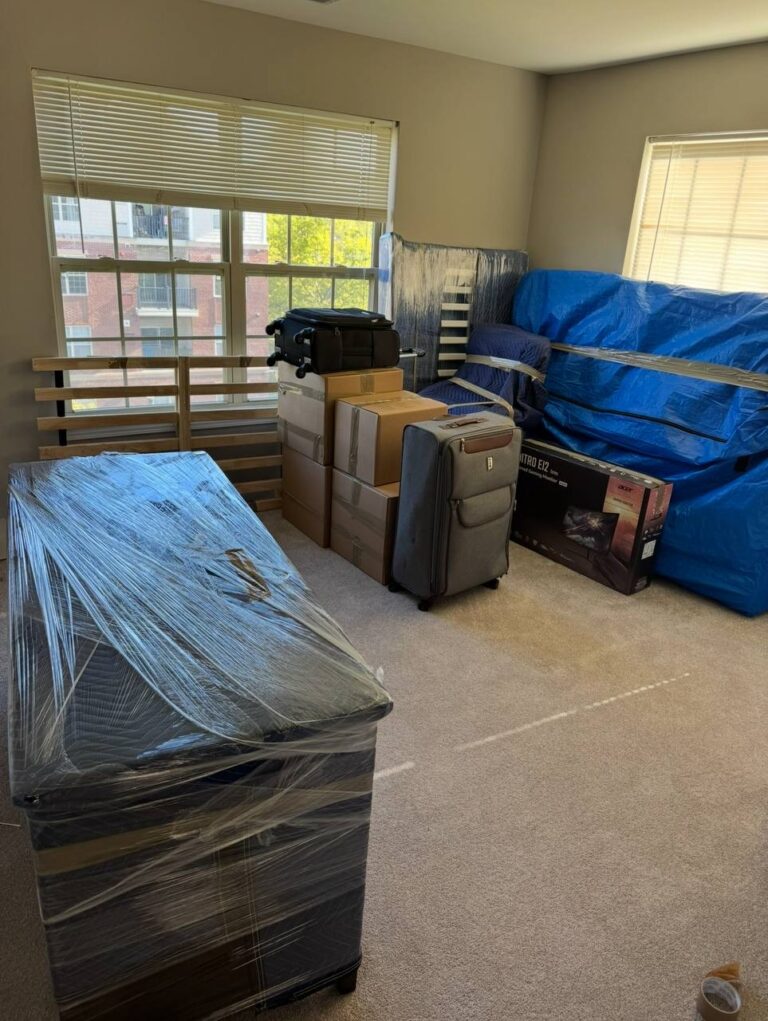
How to Pack for a Move: Room-by-Room Packing Guide
How to pack a home for moving: supplies, the box rules, room-by-room methods from kitchen to garage, fragile item technique, and a labeling system.
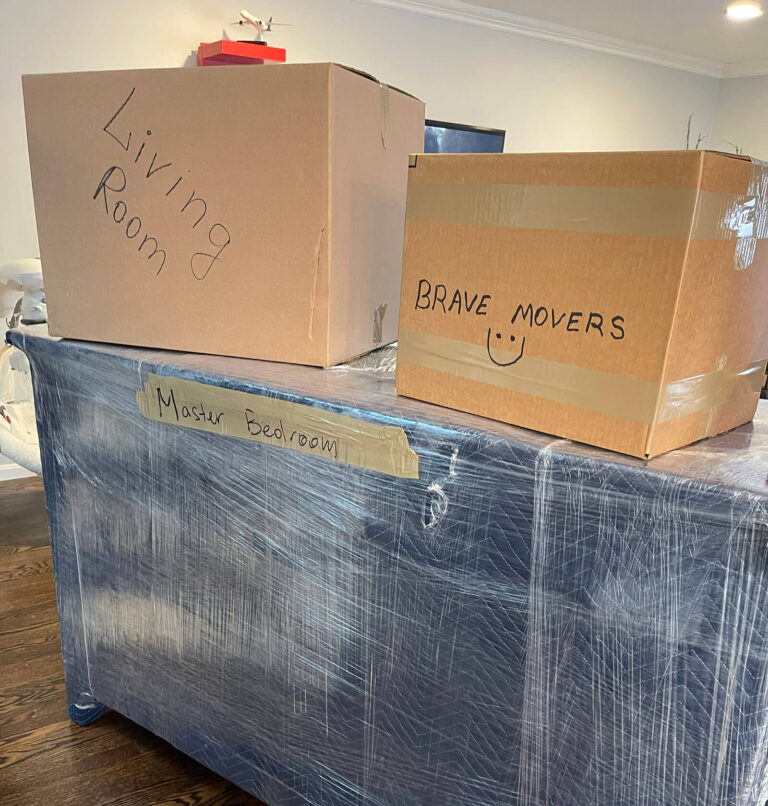
The Ultimate Moving Checklist: Your 8-Week Moving Timeline
A complete 8-week moving checklist: booking movers, packing, address changes, utilities, and moving day logistics, step by step without the panic.