
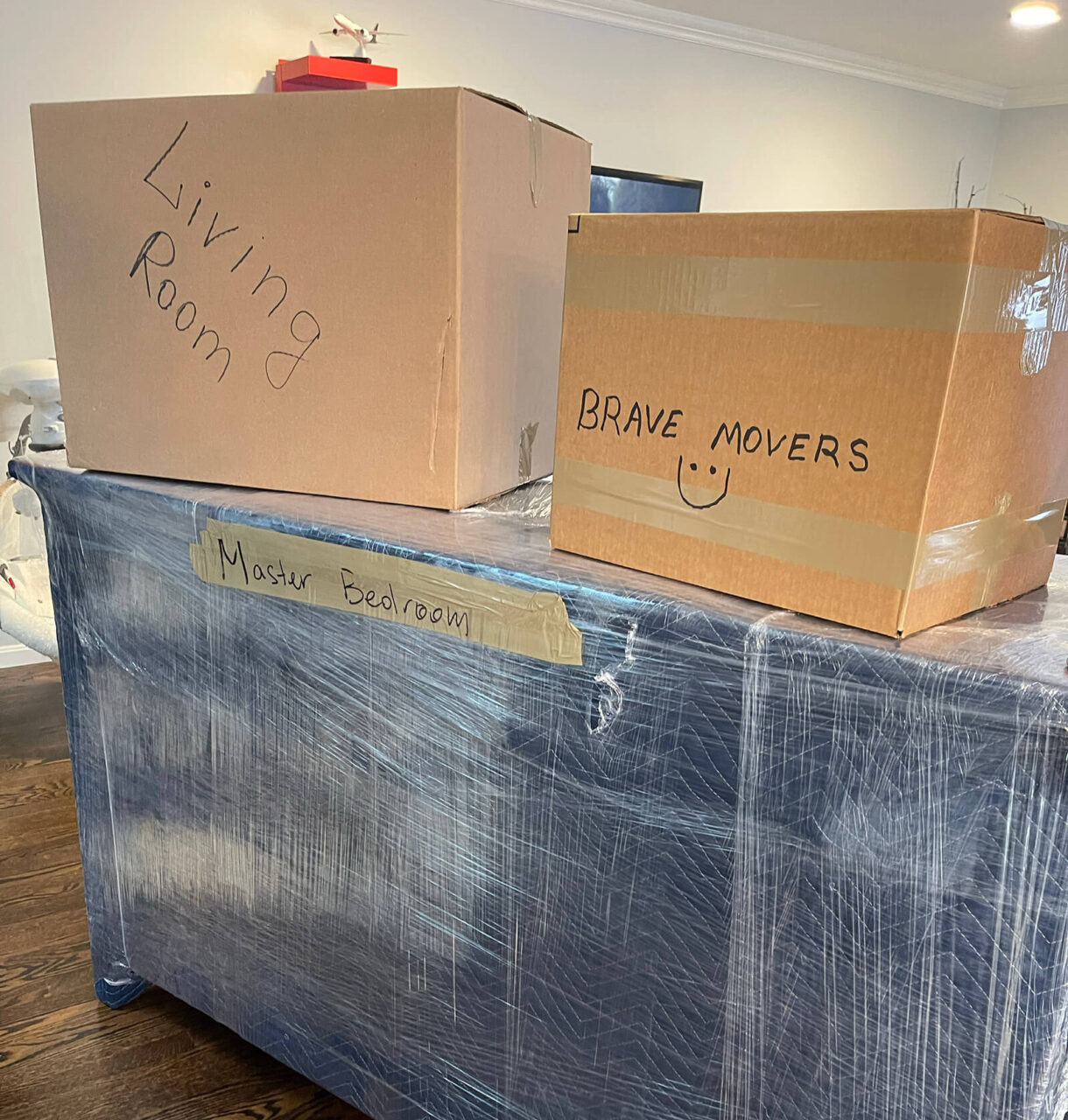
Every smooth move you have ever heard about had one thing in common: it started earlier than felt necessary. Every disaster story starts the other way, with someone assuming a two-bedroom packs itself in a weekend.
This checklist spreads the work across eight weeks, so no single day ever becomes overwhelming. Most tasks take under an hour. Follow the timeline and moving day becomes what it should be: the short, final step of a process that is already done.
How to Use This Checklist
The weeks are guidelines, not law. If you are starting six weeks out, compress the first two blocks. If you have three months, stretch them. What matters is the order: big decisions first, paperwork in the middle, physical packing last, logistics confirmed at every stage.
One rule runs through all of it: everything important gets written down. Confirmations, quotes, elevator slots, permit numbers. A move generates more small commitments than any other life event this side of a wedding, and memory is not a filing system.
Week 8: Decide and Declutter
Set your moving date. Everything else anchors to it. If you have flexibility, mid-week and mid-month dates are cheaper and easier to book than weekends and month-ends.
Request quotes from movers. Two or three companies, written quotes only. For local moves expect hourly rates; for interstate, flat written rates. A quote given without seeing your home or a detailed inventory is a guess, not a quote.
Start the purge. Go room by room with four categories: keep, sell, donate, trash. Be honest about the treadmill. Every item you remove now is an item you never pack, never pay to move, and never unpack. Sell anything valuable online while you still have weeks of listing time ahead of you.
Create a moving folder. Digital or physical. Quotes, receipts, contracts, and contacts all go in one place. Keep every receipt: some moving expenses may be tax-deductible in specific situations like military moves, and your accountant will thank you either way.
Week 7: Research and Notify
Verify your movers. For interstate moves, check the company’s USDOT number in the federal database. For any move, read recent reviews and confirm licensing and insurance. This is also the moment to ask what their coverage actually pays if something breaks; the federal default of $0.60 per pound surprises people unpleasantly.
Notify your landlord if you rent. Most leases require 30 to 60 days of written notice. Send it in writing, keep a copy, and photograph the apartment’s condition for the deposit conversation later.
Check your new home’s logistics. Elevator reservations, loading dock rules, certificates of insurance requirements, parking. Buildings in Boston and New York routinely require a COI from your movers days before they confirm an elevator slot. Ask now, not the week of.
Start using things up. Frozen food, pantry staples, cleaning supplies. The goal is a nearly empty kitchen by moving week.
Week 6: Book and Plan
Book your movers. Dates in June through September sell out weeks in advance in Boston, and September 1 is its own phenomenon. Booking early also locks your rate with companies that guarantee pricing.
Order packing supplies or book a professional packing service and skip the supply math entirely. If you are packing yourself, a rough starting kit for a two-bedroom runs 60 to 80 boxes in mixed sizes, plus tape, paper, and markers. Buy more tape than feels reasonable. It will still run out.
Plan for specialty items. Pianos, safes, large art, gym equipment, and aquariums need advance notice so the crew brings the right equipment and quotes them correctly.
Apply for parking permits if either address needs one. In Boston, the online window opens eight weeks before your date, and applying the day you qualify is the smart move.
Week 5: Measure and Map
Measure the new place. Doorways, hallways, stairwell turns, elevator dimensions. The sofa that fit your Boston triple-decker may not clear a narrower stairwell, and discovering that on moving day costs real money. Get a floor plan and decide where large furniture lands before the truck arrives.
Sell or donate what will not fit. Now you have five weeks of selling time for the pieces that failed the tape measure.
Start packing non-essentials. Books, off-season clothes, decor, guest room contents, garage shelves. Two or three boxes a day is painless; forty boxes the final weekend is not. Label every box with room and contents as you go.
Week 4: Paperwork Week
File your change of address with USPS. The online form takes minutes and forwards mail to your new address. Then update the important ones directly, because forwarding is a safety net, not a solution:
- Banks, credit cards, and investment accounts
- Employer payroll and HR
- Insurance: health, auto, renter’s or homeowner’s
- Subscriptions and delivery services
- Voter registration and driver’s license (states set their own deadlines after a move)
Set up utilities at the new address. Electricity, gas, water, and internet should activate the day before you arrive. Schedule shutoff at the old address for the day after you leave. That one-day overlap prevents the two classic disasters: moving into a dark apartment and paying the next tenant’s electric bill.
Book internet installation early. Technician windows in summer fill up weeks out in both Boston and New York.
Arrange time off work. Moving day, and ideally the day after.
Week 3: Pack in Earnest
Shift into daily packing. Everything except what you genuinely use should be in boxes by the end of this week. Work one room at a time so the mess stays contained.
Handle the valuables personally. Documents, jewelry, hard drives, and anything irreplaceable get packed into one clearly marked container that travels with you, never in the truck.
Photograph your electronics’ wiring before disconnecting anything. A picture of the cable jungle behind the TV saves an hour of trial and error later.
Confirm building logistics at both ends. Elevator slots, COI delivery, key pickup times. Get each confirmation in writing.
Week 2: The Logistics Lock
Confirm with your movers. Date, arrival window, both addresses, inventory, and price. One email or call, everything reconfirmed, no assumptions.
Finish the address updates you missed. Prescriptions transferred to a new pharmacy, vet records copied if you have pets, school records if you have kids.
Plan for moving day itself. Who watches the kids and the pets? (Not the movers’ job.) Where does your car go during loading? What is the rain plan?
Pack the kitchen except the essentials. Leave out one pot, one pan, a few plates, and coffee equipment. Everything else goes in boxes. Kitchens take longer than any other room; do not leave yours for the final day.
Defrost the freezer if it is making the trip. Towel-dry it and leave the door open.
Week 1: Final Sprint
Pack the essentials bag. This stays with you through the entire move:
- Documents: IDs, lease or closing papers, moving contract, moving folder
- Two to three days of clothes and toiletries
- Medications, chargers, laptop
- Basic tools: box cutter, screwdriver, tape measure
- Toilet paper, paper towels, hand soap, trash bags
- Snacks, water, phone charger, and anything you would panic about losing
Empty and clean. Wipe down shelves and appliances as rooms empty. For renters, this is deposit money; for sellers, it is basic decency, and in many cases a contract term.
Handle the parking reality check. If you reserved curb space in Boston, the signs go up at least 48 hours ahead. Check your spot the night before, not at 7 a.m. with a crew billing by the hour.
Withdraw cash for tips if you plan to tip. ATM lines on moving morning are a dumb way to lose twenty minutes.
Charge everything. Phone, laptop, power bank. Your phone is your map, your camera, your contract archive, and your lifeline to the crew.
Moving With Kids and Pets
Movers carry furniture; they do not do crowd control. Plan for the small members of the household separately.
Kids. Moving day is genuinely unsafe for small children: open doors, heavy items in motion, adults distracted. The best arrangement is a friend, grandparent, or sitter taking them for the day. If they must be present, designate one closed, already-packed room as their base camp with snacks and a tablet, and make sure the crew knows which door never opens.
Pets. An open front door and a terrified cat is how lost-pet posters happen. Board pets for the day, or crate them in a quiet room with a sign on the door. Feed lightly in the morning to avoid motion sickness on the drive, and set up their bowls, litter, and bed first thing at the new place so the territory smells familiar before they explore it.
Plants. Many movers will not take live plants, and none can guarantee them in a sealed truck. Move them in your car, water them two days before rather than the morning of, and wedge pots between towels so they cannot tip.
What Moving Day Actually Looks Like
For a typical two-bedroom with a three-mover crew, the day runs like this:
- 8:00 a.m. Crew arrives, walkthrough, inventory, paperwork
- 8:30 a.m. to 12:00 p.m. Wrapping, disassembly, loading
- 12:00 to 12:30 p.m. Final sweep, signatures, drive
- 12:30 to 3:00 p.m. Unload, furniture placement, reassembly
- 3:00 p.m. Walkthrough, sign-off, done
Stairs, long carries, and elevator waits stretch each block. A move that started with eight weeks of this checklist hits its marks; one that started yesterday does not.
Moving Day
Be there when the crew arrives. Walk the crew leader through the home, flag fragile items, and confirm the inventory list. Photograph the condition of valuable furniture before it is wrapped.
Let the professionals work. Answer questions, stay reachable, and resist the urge to carry things alongside them. A good crew has a system; the fastest help you can give is clear decisions.
Do the final sweep. Every closet, every cabinet, the dishwasher, the washer, the attic, the basement storage unit, the fire escape, the balcony. The items most often left behind are the ones hiding in appliances and outdoor corners.
At the new place, direct traffic. Stand where you can see the door and send each piece to its room. A move with a floor plan unloads in half the time of one where every box becomes a question.
Check the truck before it leaves. Open it, look in, then sign.
If Your Dates Do Not Line Up
Leases rarely cooperate. If the old place ends before the new one begins, do not stack a hotel, a truck, and a panic attack into one weekend. Put the household into short-term storage, keep a suitcase of essentials with you, and move twice on calm days instead of once in chaos. The same trick works for renovations, staging a home for sale, and long-distance moves where delivery windows refuse to align.
The First Week After
- Beds first, then the kitchen, then bathrooms. Sleep, food, and hygiene. Everything else can wait.
- Break down boxes as you empty them. Flattened cardboard stacks; full boxes spread.
- Test everything. Run the dishwasher, flip every breaker, check every outlet. Report problems to the landlord or seller immediately, in writing.
- Update the last stragglers. Driver’s license, voter registration, and any account that still shows the old address.
- Leave the review. If your movers did well, say so online. In an industry where reputation is everything, it is the tip that keeps working.
The Bottom Line
A move is fifty small tasks, and none of them are hard. What makes moves miserable is stacking all fifty into the final week. Spread across eight weeks, each one takes less time than a grocery run.
Start with the two decisions everything else depends on: your date and your movers. If the date is set, the second one takes ten minutes on our booking page, and the rest of this checklist unfolds on schedule from there.
Frequently asked questions
For a studio with minimal furniture, you can compress this into four weeks without pain. For a family home, eight weeks is comfortable rather than generous. The timeline matters most in summer, when movers, elevators, and internet installers all book out weeks ahead.
Two to three weeks ahead in the off-season, four to six weeks in summer, and six to eight weeks if your date is anywhere near September 1 in Boston. Booking early locks both the date and, with companies that guarantee rates, the price.
Cut the checklist to its skeleton: book movers today, declutter only the obvious trash, notify landlord and utilities, pack room by room starting now, and buy every service that saves time. Professional packing exists for exactly this situation. A full home packed by a crew in one day costs money but buys back two weeks you do not have.
The same five things: elevator reservations, certificates of insurance for buildings, parking permits, changing the address with banks and the DMV, and measuring whether large furniture fits through the new doorways. Every one of these is cheap to handle early and expensive to discover late.
Professional crews work through rain and snow with floor protection and wrap; the move happens. Your job is towels at both doors, clear salted walkways, and plastic bins instead of cardboard for anything paper-based. True emergencies like declared snow emergencies in Boston can override even parking permits, so have a backup date conversation with your movers in winter.
Both work. Self-packing saves money but takes two to three weeks of evenings for a typical apartment. Professional packing services do it in a day with proper materials and accountability for fragile items. A hybrid, where you pack books and clothes and pros handle the kitchen and breakables, fits most budgets.
Three things only. Pack and stage the essentials bag by the door. Charge your phone and power bank. Confirm the morning logistics one last time: crew arrival window, elevator slot, and where the truck parks. Everything else should already be done, and if this checklist did its job, it is.
More than you think. A studio runs 20 to 30 boxes, a one-bedroom 30 to 50, a two-bedroom 60 to 80, and a family home 100 or more. Buy or order 20 percent extra and return what you do not use; running out of boxes on the final weekend is a ritual nobody enjoys twice.
Stay calm and document. Photograph damage, note problems on the inventory before signing, and contact the company in writing the same day. Licensed movers have claims processes, and written records move them along.
You May Also Like

Moving to Boston: A Neighborhood Guide for Newcomers
A newcomer's guide to Boston neighborhoods: rent levels, the September 1 lease cycle, broker fees, transit, and which areas fit students, professionals, and families.

How to Choose a Moving Company in Boston: Licenses, Insurance, Red Flags
How to pick a Boston mover without getting burned: USDOT verification, real insurance vs the $0.60 default, quote traps, scam red flags, and the eight questions that reveal everything.
How to Pack for a Move: Room-by-Room Packing Guide
How to pack a home for moving: supplies, the box rules, room-by-room methods from kitchen to garage, fragile item technique, and a labeling system.