

Boston to New York is the most traveled moving corridor in the Northeast, and it is easy to see why. Jobs, graduate programs, relationships, and plain curiosity pull thousands of people down I-95 every year. The distance is short enough to feel simple and long enough to punish bad planning.
This guide covers what the move actually costs in 2026, how interstate pricing works, what surprises wait on the New York side, and a week-by-week checklist that keeps the whole thing boring, which is exactly what you want a move to be.
The Route at a Glance
Boston to Manhattan is roughly 215 miles. In clean traffic the drive takes about four hours via the Mass Pike and I-95, or I-84 through Connecticut. In real traffic, add an hour and a prayer.
That distance matters for pricing because it sits in a comfortable middle ground. It is a true interstate move, regulated at the federal level, but short enough that the same crew can load in Boston in the morning and unload in New York the same day. Most companies quote it as a flat price rather than an hourly one, and delivery typically happens within one to two days.
What It Costs
Market pricing for Boston to New York varies widely depending on home size and service level. Across published 2026 data, a Boston to New York move runs anywhere from about $700 for a minimal studio job to $4,800 or more for a large home with full packing. Most one and two bedroom moves land between $1,200 and $3,000.
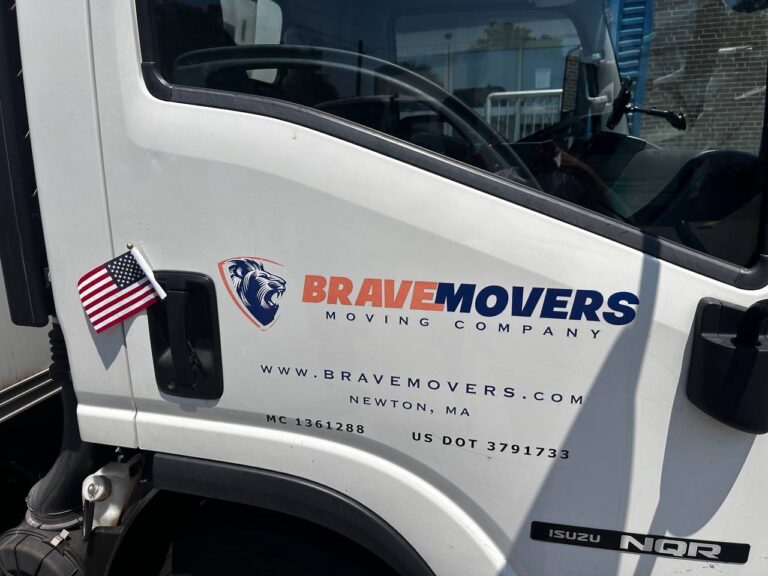
The number that matters is your number, and flat rates are the way to get it. At Brave Movers, Boston to New York starts from $950 for a studio or one-bedroom apartment, with fuel, mileage, and tolls already included in the quote. That is the structure you want from any company on this route: one written figure, everything itemized, nothing added after the truck is loaded. You can see all our flat-rate destinations on the pricing page.
For comparison, the DIY version of this move is not as cheap as it looks:
- Truck rental, one way, Boston to New York: $300 to $600 depending on size and date
- Fuel and tolls for a loaded box truck: $150 to $250
- Insurance, dollies, blankets, and materials: $100 to $200
- A parking ticket in Manhattan because the truck could not legally stop anywhere: a classic, and entirely optional
Add two days of your own labor and a drive you do not want to make in a vehicle that size, and the professional option usually costs less than the difference feels like.
How Interstate Pricing Works
Once your move crosses a state line, federal rules apply, and they work in your favor if you know them.
Hourly billing ends at the state line. Interstate moves are priced by shipment size, distance, and services, quoted as a single written figure. If a company offers to do Boston to New York “by the hour,” walk away. That is not how this route should be priced.
Estimates come in two legal types. A binding estimate locks the price: if the inventory you listed is what gets loaded, that is what you pay. A non-binding estimate can grow, but federal rules cap what the mover can demand at delivery at 110% of the original estimate, with the rest billed later. Neither type protects you if you add three rooms of furniture after the quote, so the inventory is everything.
Licensing is checkable. Interstate movers must hold a USDOT number, and you can look up any company’s record in the federal database in two minutes. A legitimate mover volunteers their USDOT number. Brave Movers operates under USDOT 3791733, and any company you consider should be equally easy to verify.
Timing is fast on this route. Unlike cross-country shipments that share trucks and take weeks, Boston to New York is typically a dedicated run: your belongings are the only load on the truck, delivered in one to two days, often same day for morning loads.
What Drives the Price Up or Down
Home size and inventory. The biggest factor by far. A studio and a three-bedroom are different jobs on the same highway.
Access at both ends. This is the Boston and New York special: two of the hardest parking and access environments in the country on a single move. A fourth-floor Boston walk-up loading into a Manhattan elevator building with a two-hour window costs more than two ground-floor apartments would. Disclose both ends honestly when you request quotes, or the quote means nothing.
Packing. Full packing service on a one-bedroom typically adds several hundred dollars. Partial packing, where you handle books and clothes and the crew handles the kitchen and fragile items, is the sweet spot for most budgets.
The calendar. Late June through early September is peak season, and September 1 in Boston is its own universe. Mid-week, mid-month moves between October and April are the cheapest this route gets.
Storage gaps. If your New York lease starts after your Boston one ends, do not force a same-day miracle. Short-term storage bridges the gap and turns one frantic day into two manageable ones.
What an Honest Quote Includes
A real interstate quote for this route fits on one page and answers every question below without a phone call:
- The total price, in dollars, not a range
- What the price covers: labor, truck, fuel, mileage, tolls, materials like blankets and wrap
- Disassembly and reassembly of standard furniture
- The pickup window and the delivery commitment
- Coverage: what happens financially if something breaks
- What would change the price: added items, added stops, undisclosed stairs
If a quote is missing any of these, ask for it in writing. A company that will not put the delivery window or the fuel policy on paper is telling you something. For reference, our quotes on this corridor include the truck, fuel, mileage, tolls, furniture disassembly and reassembly, blankets, and tools, with the rate guaranteed after booking.
Insurance on the Interstate Leg
Interstate moves follow federal coverage rules, and the default is worse than most people expect.
The legal minimum, called released value protection, pays $0.60 per pound per item. A ruined 40-pound laptop bag earns $24 under that formula. It exists so movers can technically say everything is covered.
Full value protection is the real thing: the mover repairs the item, replaces it, or pays current market value. Some companies charge extra for it; others build it in. Brave Movers includes value protection up to $20,000 in household goods coverage at no additional charge, which on a $950 to $3,000 move is a significant piece of the value.
Two habits matter as much as the policy. First, photograph furniture and electronics before loading and again at delivery; claims run on evidence. Second, keep irreplaceables with you. Documents, jewelry, hard drives, and anything sentimental belong in your car, because no coverage amount prices them correctly.
The New York Side: What Boston Movers Forget to Warn You About
New York does not play by Boston rules. Three things catch people off guard.
Certificates of insurance are mandatory culture. Most Manhattan and Brooklyn buildings, and nearly all managed ones, require a certificate of insurance from your moving company before they will let a truck near the freight elevator. No COI, no move, and the building will not bend. Licensed movers issue COIs as routine paperwork, but the request needs to happen days in advance, with the building’s exact requirements in hand.
Elevator reservations run your day. Freight elevators are booked in slots, often two to three hours, and other tenants are competing for them. Miss your slot and you may be waiting until the next day with a loaded truck. Confirm the slot a week ahead and again the day before.
There is no Boston-style parking permit. New York does not reserve curb space for residential moves. Trucks work with what exists: legal commercial zones, hydrant-adjacent improvisation, and a driver who stays with the vehicle while the crew shuttles. This is normal in New York and looks like chaos if you learned to move in Boston. It also means access costs time, which is priced into any honest quote.
The practical takeaway: your moving company needs both addresses, both floor numbers, both elevator situations, and both parking realities before they quote. Companies that ask these questions are the good ones.
Your Week-by-Week Checklist
Eight weeks out
- Declutter ruthlessly. Interstate pricing follows volume, so every box you sell or donate is money back. New York apartments are smaller than Boston ones on average; measure your furniture against floor plans before paying to ship it.
- Request quotes from at least two or three licensed companies. Written, itemized, flat rates only.
Six weeks out
- Book your movers. Summer dates on this route sell out weeks ahead.
- Give notice per your Boston lease terms and start the security deposit documentation: photos, move-out condition, forwarding address.
Four weeks out
- Start packing non-essentials: books, off-season clothes, decor. Label boxes by room and priority.
- File your change of address with USPS and update banks, subscriptions, and anyone who mails you things.
- If you are driving your own car down, plan around the truck: convoy style works, racing the truck does not.
Two weeks out
- Request the COI from your movers and deliver it to your New York building. Confirm their elevator slot in writing.
- Set up utilities, internet, and renter’s insurance at the new address. New York internet installation windows book out weeks in summer; do this early.
- Confirm whether your Boston building needs anything for move-out: elevator padding, a COI, notice to the manager.
One week out
- Confirm everything with your movers: addresses, arrival window, inventory, contact numbers, and the flat rate in writing one more time.
- Finish packing except essentials. A half-packed apartment on loading morning is how flat rates get renegotiated.
- Defrost the freezer if it is making the trip.
Day before
- Pack the essentials bag: documents, chargers, medication, two days of clothes, toiletries, basic tools, toilet paper. This bag rides with you, not in the truck.
- If you got a Boston parking permit for the load-out, check the curb tonight and deal with any squatters now, not at 7 a.m.
Moving day
- Be there for the load, walk the inventory with the crew leader, and photograph the condition of anything valuable before it goes on the truck.
- Do a final sweep of the Boston apartment: closets, cabinets, the basement storage unit, the fire escape plant.
- In New York, have the floor plan ready. Telling the crew where furniture lands as it comes off the truck is the difference between a two-hour unload and a four-hour one.
How to Pay Less on This Route
- Move mid-week, mid-month, off-season. Tuesday in November beats Saturday in July by hundreds of dollars.
- Shrink the shipment. The cheapest box is the one you never move. Boston to New York pricing follows volume closely, so a serious purge pays twice.
- Pack the easy stuff yourself. Books, clothes, and linens are safe DIY packing. Leave glassware and kitchens to pros if you buy packing at all.
- Take the flat rate. A guaranteed price with fuel and tolls included removes the two variables that inflate corridor moves. Our interstate moving service is built exactly this way.
- Avoid September 1 at the Boston end. The city’s mass moving day spikes demand for every truck in the region, including the ones headed south.
The Bottom Line
Boston to New York is a short interstate move with outsized logistics: two dense cities, two sets of building rules, and one corridor every mover in the Northeast knows by heart. The moves that go well share the same traits: a licensed company with a verifiable USDOT number, a written flat rate, a COI delivered early, and a checklist that started weeks before the truck.
If you are planning the move, get your guaranteed flat rate through our booking page. We run this corridor every week, and the price we quote is the price you pay.
Frequently asked questions
Most one and two bedroom moves run $1,200 to $3,000 depending on volume, access, and services. Flat rates on this route start lower for small apartments: Brave Movers moves a studio or one-bedroom from Boston to New York starting from $950, fuel and tolls included.
Loading takes two to four hours for a typical apartment, the drive is about four hours, and unloading runs two to three hours. Most Boston to New York moves complete in one day; some companies quote next-day delivery depending on schedule.
On this route, usually not. Because the distance is short, most reputable movers run dedicated trucks: your belongings load in Boston and unload in New York without warehouse transfers. Ask to be sure, because shared long-haul shipments are where damage and delays live.
Yes, or someone you trust must be. Buildings need access, elevators need supervising, and furniture needs directing. If timing is tight, arrange key handoff with your building manager in advance.
You have three options: drive it down, ship it, or leave it. Many Boston transplants discover that a car in New York costs more in parking, insurance, and tickets than it earns in convenience, and this move is the natural moment to sell.
Federal rules and company policies exclude hazardous materials: paint, propane, cleaning chemicals, ammunition, and anything flammable. Plants are a gray zone, since many movers decline them and none can guarantee survival in a hot truck. Pets always travel with you, never in the cargo area. Ask for the excluded-items list when you book, and plan a car load for the things on it.
Four to six weeks in summer, two to three weeks from October through April. Earlier is always safer if your date is fixed by a lease.
If the crew earned it, yes. The common guideline is 10 to 20 percent of the total, split among the team, or $40 to $80 per mover for a full-day corridor job. If the same crew loads in Boston and unloads in New York, one tip at the end covers the whole job.
With a binding flat rate and an accurate inventory, yes. The price changes only if the job changes: more items, a surprise flight of stairs, a second stop. Honest inventories make honest quotes.
You May Also Like

Moving to Boston: A Neighborhood Guide for Newcomers
A newcomer's guide to Boston neighborhoods: rent levels, the September 1 lease cycle, broker fees, transit, and which areas fit students, professionals, and families.
How to Choose a Moving Company in Boston: Licenses, Insurance, Red Flags
How to pick a Boston mover without getting burned: USDOT verification, real insurance vs the $0.60 default, quote traps, scam red flags, and the eight questions that reveal everything.
How to Pack for a Move: Room-by-Room Packing Guide
How to pack a home for moving: supplies, the box rules, room-by-room methods from kitchen to garage, fragile item technique, and a labeling system.